感染症は、ヒトゲノムを書き換える力を持っている。この100年で最も深刻な問題のひとつは、COVID-19の原因物質であるSARS-CoV-2によるものだ。病気に対する宿主の反応は、個体によって異なる宿主の遺伝的特性によって支配されている部分がある。ある遺伝子型は、他の遺伝子型よりも軽症になる可能性がある。病気の結果の違いは、感染症に対する感受性、自然免疫反応とその初期段階での感染を制御する能力、適応免疫反応とその後期段階での病気を制御する能力、そして病気が引き起こすかもしれない最も深刻な被害のいくつかを占める炎症反応における変動から生じる可能性がある。さらに、個体によって薬物療法によく反応する人とそうでない人がいる一方、ワクチン接種によく反応する人とそうでない人がいる。これらの特性や分子的な相互作用、それらを制御する基礎となる遺伝子はすべて、自然淘汰と進化の対象である。しかし、感染や治療結果の違いは、ワクチンを含む医薬品の入手可能性の違いや、社会経済的な理由に起因する感染リスクを回避するための隔離能力などのライフスタイルの選択によって生じることもある。これらの違いは遺伝学に基づくものではなく、進化的変化や病原体への適応をもたらすものでもない。
人類の進化に非常に強い影響を与えた病気のひとつに、マラリアがある。マラリアは、マラリア原虫をはじめとする様々な種類の寄生虫属によって引き起こされる。マラリアに対する適応のひとつに、赤血球が鎌状になる変異型ヘモグロビン蛋白質をコードする鎌状赤血球対立遺伝子(Hb-S)のヘテロ接合性がある(ホモ接合状態の場合)ことが知られている。ヘテロ接合体の個体はマラリアに感染しにくいが、その代償として、世代を経るごとに鎌状赤血球のホモ接合体が出現し、重度の貧血を呈するようになるのである。 このようなヘテロ接合体の選択的優位性をヘテロ接合体優位性(heterozygous advantage)という。ヘテロ接合体はマラリアに対する抵抗力が強く、また、ホモ接合体では致命的となる鎌状赤血球形質の影響も軽微か影響を受けない。この選択圧の結果、異常に多い疾患対立遺伝子となる。これは、ホモ接合体の場合、ヘモグロビン鎌状赤血球対立遺伝子(Hb-S)と正常ヘモグロビン対立遺伝子(Hb-A)の両方に対して同時に選択が作用するためである。マラリアがなければ、Hb-Sに対する選択により、Hb-Sの頻度は実際に観察されるよりもはるかに低くなるであろう。
また、サラセミアと呼ばれる他のいくつかの貧血も、マラリアへの適応を示すと考えられている。鎌形赤血球貧血は、ヒトの病気においてヘテロ接合体が有利であることを示す最も優れた証拠であるが、他にも例があると考えられており、例えば嚢胞性線維症やテイ・サックス病のような他のいくつかの有害な遺伝形質が高い頻度で見られることを説明することができる。
COVID-19は自然淘汰の作用が弱いのだ。なぜなら、重篤な罹患者のほとんどが65歳以上で、生殖機能が低下しているためである。自然淘汰が将来の世代の対立遺伝子頻度に影響を与え、病原体に反応して進化が起こるのは、人々が生殖期かそれ以前に罹患したときだけである。しかし、多くの人々が罹患し、特にSARS-CoV-2の後期変異型に罹患した若い人々を考えると、自然選択は依然として影響力があり、ヒトとウイルスは今後も共進化を続けると思われる。進化とは何世代にもわたって起こるものだと考えているが、現在の世代においても、最も感染しやすい人の数は徐々に減少し、集団がウイルスと相互作用する力学も変化している。さらに、ワクチンや医薬品も、その相互作用に強力な影響を与える。
COVID-19の流行当初は、宿主遺伝学に十分な注意が払われていなかった。我々は、今でも非常に重要な特定の人口統計学的要因に焦点を合わせていた。その要因とは、アフリカ系アメリカ人やヒスパニック系住民の罹患率が非常に高いこと、高齢者の間で強い感染選択性があること、予後が悪いこと、などだ。当時の最善の方法は、社会的距離の取り方やマスキングといった、1918年のインフルエンザ流行時に使用された、実績ある公衆衛生対策だった(例えば、下記 Brauner et al., 2021 参照)。それでも、初期の研究では、ABO血液型遺伝子座を含む、COVID-19感受性の変異に関連する多くの遺伝子座が示唆され、大規模なコンソーシアム(COVID-19宿主遺伝学イニシアチブ)が、COVID-19結果に対するヒトの遺伝的影響の問題を議論し始めたのである。
PNASに最近掲載されたHugo Zebergの短い論文によると、COVID-19でより深刻な結果をもたらすヒトゲノムの領域は、5〜7万年前にホモ・ネアンデルターレンシスとの交雑によって受け継がれたものであることが示唆されている。[注:このゲノム領域は染色体領域3p21.31の周辺にマッピングされ、LZTFL1(ロイシンジッパー転写因子様1)遺伝子を含んでいるが、LZTFL1そのものではなく、この領域内の制御配列が重要である可能性があるため、この領域を染色体位置で表記した]。3p21.31領域は現在、ヨーロッパで約16%、アジアで約50%存在する。この領域は、HIVの共受容体をコードするCCR5など、近傍のいくつかの遺伝子の発現を調節しているようである。Zebergは、この遺伝子領域によってHIV感染のリスクが27%低くなることを示している。CCR5は、32塩基対の欠損で変異しており(CCR5-Delta32)、後天性免疫不全症候群(AIDS)の原因となる感染因子であるHIVの感染に対する予後の改善や感受性の低下と関連しているとされている。また、Zebergは、この領域はおそらく1万年から2万年前に淘汰されて頻度が上昇したのだろうと述べている。CCR5-Delta32は、約10,000年前に出現した天然痘に対しても予防的であると考えられる[Galvant & Slatkin, PNAS 100: 15276-9 12/9/2003 参照]。この領域[注:LZTFL1領域はDownesら、2021 Nat Genet 53: 1606でCOVID-19リスクと関連する特定領域として定義されている;その0.55kb以内(これは非常に密な連鎖)にはCCR5]はコレラの流行地で見られる[つまり、現在この領域はコレラに対して防御的である何らかの可能性を秘めているのであろう]。[観察参考文献 Zeberg & Paabo Nature 587: 610 2020]. 現在、HIVによる地域に対する正の選択的効果とCOVID-19による地域に対する負の選択的効果がある。
CRISPRを用いた生殖細胞レベルでのヒトの遺伝子操作の最初の試みの一つが、中国の新生児双子にHIV感染からの保護を与えるためにCCR5-Delta32変異を挿入するために行われたことは注目に値する(Davies, 2021; Greely, 2022を参照)。この試みは、生命倫理的な理由から広く、そして当然ながら非難された。しかし、CCR5-Delta32変異を移植する試みが完全に成功していたならば、結果として生まれた個体は、過去2年間でより広くなった脅威であるCOVID-19に感染するリスクが高まっていたかもしれないことが、今では明らかである。ほとんどのヒトがHIVに感染しやすいという事実は、HIV感染に対する抵抗力が、たまたま現在より一般的で、遠い過去にはより一般的であったかもしれない他の病原体に対する感受性を犠牲にしている結果かもしれない。同様の議論は、鎌状赤血球貧血、テイ・サックス病、嚢胞性線維症などの頻度の高さについてもなされている。生命倫理の観点からの教訓は明白である。何十万年もの進化によって洗練されたヒトゲノムを改ざんすることは危険なことであることは、聖書に書かなくともわかるだろう。
3p21.31領域以外にも、COVID-19の重症度に関連する主な要因は第9染色体上のABO血液型遺伝子座で発生しており、血液型Aの人は、よりリスクが高い可能性が示唆されている。また、COVIDに対する感受性の増減に関連する血液タンパク質も多数ある。すなわち、一連の血液タンパク質は、そのレベルの上昇が、より良好な転帰またはより重篤な転帰と関連している。ここでは、まだ表面的な部分しか見ていない。[これらのタンパク質の一覧は、以下のPalmos et al.の抄録を参照のこと。]
COVID-19とその人類への影響については、まだ多くの疑問が残っている。例えば、ロングCOVIDは臨床的に認識できる症状のようで、COVIDを取得した個体の10〜30%が1年以上先まで影響を受けているそうだ。COVID-19はまだ2年程度しか経過していないので、最終的な結果はわからない。また、ある研究では、脳の特定の部位が萎縮する人がいること、また、ある研究では、喫煙によるものとほぼ同等の心血管疾患のリスク増加が見られることが分かっている。
このように、この病気にかかると、過去に認識された以上のリスクがあるのだ。病気になるのは、症状が軽いか重いか、死亡するか回復するかだけではない。まだ解明されていない下流の問題があるからこそ、これ以上の感染を減らそうとする簡単な対策を続けることが重要なのだ。また、これらの結果は、遺伝的要因だけでなく、社会経済的要因や合併する生理的条件にも影響されると思われる。パンデミックの渦中にあって、こうした慎重な遺伝学的研究を計画することは困難であったが、今こそそれを行うべき時である。この研究は、COVID-19や将来の感染症に対する重要な展望や、治療の改善をもたらす可能性があるからである。
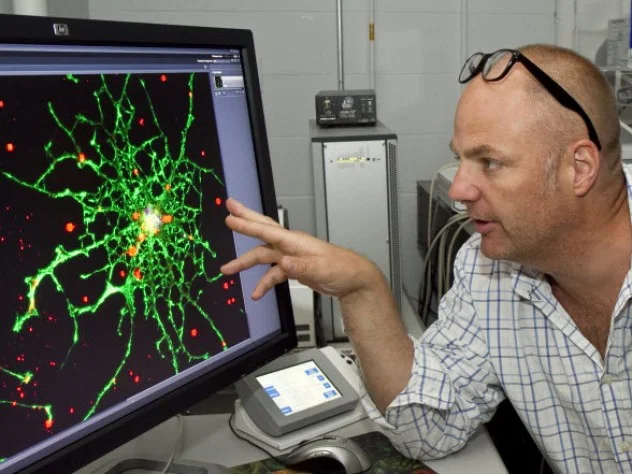
写真:
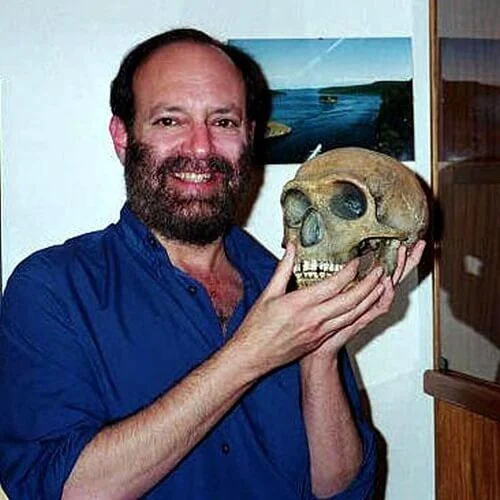
ゴールドマン博士と友人
参考文献:
Interactive map of chromosome 3 region
Brauner, J. M., et al. (2021). “Inferring the Effectiveness of Government Interventions Against COVID-19.” Science 371(6531): eabd9338.
Abstract: “Governments are attempting to control the COVID-19 pandemic with nonpharmaceutical interventions (NPIs). However, the effectiveness of different NPIs at reducing transmission is poorly understood. We gathered chronological data on the implementation of NPIs for several European and non-European countries between January and the end of May 2020. We estimated the effectiveness of these NPIs, which range from limiting gathering sizes and closing businesses or educational institutions to stay-at-home orders. To do so, we used a Bayesian hierarchical model that links NPI implementation dates to national case and death counts and supported the results with extensive empirical validation. Closing all educational institutions, limiting gatherings to 10 people or less, and closing face-to-face businesses each reduced transmission considerably. The additional effect of stay-at-home orders was comparatively small.”
Davies, K. (May 2021, paperback date). Editing Humanity: The CRISPR Revolution and the New Era of Genome Editing.
Downes, D. J., et al. (2021). “Identification of LZTFL1 As a Candidate Effector Gene at a COVID-19 Risk Locus.” Nature Genetics 53(11): 1606-1615.
Abstract: “The severe acute respiratory syndrome coronavirus 2 (SARS‑CoV‑2) disease (COVID-19) pandemic has caused millions of deaths worldwide. Genome-wide association studies identified the 3p21.31 region as conferring a twofold increased risk of respiratory failure. Here, using a combined multiomics and machine learning approach, we identify the gain-of-function risk A allele of an SNP, rs17713054G>A, as a probable causative variant. We show with chromosome conformation capture and gene-expression analysis that the rs17713054-affected enhancer upregulates the interacting gene, leucine zipper transcription factor like 1 (LZTFL1). Selective spatial transcriptomic analysis of lung biopsies from patients with COVID-19 shows the presence of signals associated with epithelial-mesenchymal transition (EMT), a viral response pathway that is regulated by LZTFL1. We conclude that pulmonary epithelial cells undergoing EMT, rather than immune cells, are likely responsible for the 3p21.31-associated risk. Since the 3p21.31 effect is conferred by a gain-of-function, LZTFL1 may represent a therapeutic target.”
Greely, H.T. (March 2022, paperback date). CRISPR People: The Science and Ethics of Editing Humans.
Palmos, A. B., et al. (2022). “Proteome-Wide Mendelian Randomization Identifies Causal Links Between Blood Proteins and Severe COVID-19.” PLoS Genetics 18(3): e1010042.
Abstract: “In November 2021, the COVID-19 pandemic death toll surpassed five million individuals. We applied Mendelian randomization including >3,000 blood proteins as exposures to identify potential biomarkers that may indicate risk for hospitalization or need for respiratory support or death due to COVID-19, respectively. After multiple testing correction, using genetic instruments and under the assumptions of Mendelian Randomization, our results were consistent with higher blood levels of five proteins GCNT4, CD207, RAB14, C1GALT1C1, and ABO being causally associated with an increased risk of hospitalization or respiratory support/death due to COVID-19 (ORs = 1.12–1.35). Higher levels of FAAH2 were solely associated with an increased risk of hospitalization (OR = 1.19). On the contrary, higher levels of SELL, SELE, and PECAM-1 decrease risk of hospitalization or need for respiratory support/death (ORs = 0.80–0.91). Higher levels of LCTL, SFTPD, KEL, and ATP2A3 were solely associated with a decreased risk of hospitalization (ORs = 0.86–0.93), whilst higher levels of ICAM-1 were solely associated with a decreased risk of respiratory support/death of COVID-19 (OR = 0.84). Our findings implicate blood group markers and binding proteins in both hospitalization and need for respiratory support/death. They, additionally, suggest that higher levels of endocannabinoid enzymes may increase the risk of hospitalization. Our research replicates findings of blood markers previously associated with COVID-19 and prioritizes additional blood markers for risk prediction of severe forms of COVID-19. Furthermore, we pinpoint druggable targets potentially implicated in disease pathology.”
Zeberg, H. (2022). “The Major Genetic Risk Factor for Severe COVID-19 Is Associated with Protection Against HIV.” PNAS 119(9): e2116435119.
Abstract: “There are genetic risk factors that influence the outcome of
COVID-19 [COVID-19 Host Genetics Initiative, Nature 600: 472–477
(2021)]. The major genetic risk factor for severe COVID-19 resides
on chromosome 3 and is inherited from Neandertals [H. Zeberg, S.
Pääbo, Nature 587: 610–612 (2020)]. The risk-associated DNA seg-
ment modulates the expression of several chemokine receptors,
among them CCR5, a co-receptor for HIV which is down-regulated
in carriers of the COVID-19 risk haplotype. Here I show that carriers
of the risk variant have an ∼27% lower risk of HIV infection.”
Zeberg, H. and S. Pääbo (2020). “The Major Genetic Risk Factor for Severe COVID-19 Is Inherited from Neanderthals.” Nature 587(7835): 610-612.
Abstract: “A recent genetic association study identified a gene cluster on chromosome 3 as a risk locus for respiratory failure after infection with severe acute respiratory syndrome coronavirus 2 (SARS-CoV-2). A separate study (COVID-19 Host Genetics Initiative) comprising 3,199 hospitalized patients with coronavirus disease 2019 (COVID-19) and control individuals showed that this cluster is the major genetic risk factor for severe symptoms after SARS-CoV-2 infection and hospitalization. Here we show that the risk is conferred by a genomic segment of around 50 kilobases in size that is inherited from Neanderthals and is carried by around 50% of people in south Asia and around 16% of people in Europe.”
Zeberg, H. and S. Pääbo (2021). “A Genomic Region Associated with Protection Against Severe COVID-19 Is Inherited from Neandertals.” PNAS 118(9): e2026309118.
Abstract: “It was recently shown that the major genetic risk factor associated with becoming severely ill with COVID-19 when infected by severe acute respiratory syndrome coronavirus 2 (SARS-CoV-2) is inherited from Neandertals. New, larger genetic association studies now allow additional genetic risk factors to be discovered. Using data from the Genetics of Mortality in Critical Care (GenOMICC) consortium, we show that a haplotype at a region on chromosome 12 associated with requiring intensive care when infected with the virus is inherited from Neandertals. This region encodes proteins that activate enzymes that are important during infections with RNA viruses. In contrast to the previously described Neandertal haplotype that increases the risk for severe COVID-19, this Neandertal haplotype is protective against severe disease. It also differs from the risk haplotype in that it has a more moderate effect and occurs at substantial frequencies in all regions of the world outside Africa. Among ancient human genomes in western Eurasia, the frequency of the protective Neandertal haplotype may have increased between 20,000 and 10,000 years ago and again during the past 1,000 years.”
BioQuick News:Feature Article: “COVID-19: Rewriting the Human Genome”